

Year in Review – M&A Activity in 2025
M&A activity in 2025 has been defined by a strong rebound in deal value, even as overall deal counts remain below the 2021 peak. Activity was relatively subdued in early 2025 as buyers and lenders continued to digest higher interest rates and tighter financing conditions, but momentum accelerated meaningfully through mid‑year and into the second half as confidence improved, credit markets stabilized, and “megadeals” returned across several sectors. Technology, energy and power, healthcare, and financial services have been notable drivers of volume, with acquirers focusing on scale, efficiency, and strategic capabilities such as data, AI, and infrastructure. Private equity sponsors have also re‑emerged more actively, leaning on larger equity checks and creative structures to get deals done. Together, these forces have made 2025 feel like a transition year from defensive portfolio management toward more offensive, growth‑oriented transactions, setting the stage for a potentially more robust deal environment heading into 2026.

2026 M&A Outlook
M&A in 2026 is expected to build on 2025’s rebound, with modest volume growth but stronger emphasis on larger, more strategic deals, helped by easing interest rates and tax changes that lower the cost of capital.
Overall activity and volumes
Forecasts suggest U.S. deal volume (heavily influenced by private equity) could grow by roughly 3% in 2026 after a stronger jump in 2025, with deal value boosted by more megadeals and transformational transactions. Mid‑market deals (roughly 50–500 million dollars) are expected to remain the workhorse of the market because they are easier to finance and attract fewer regulatory challenges than the very largest combinations.
Key drivers
Lower or stabilizing interest rates, improved credit markets, and the “One Big Beautiful Bill Act” tax changes are all cited as tailwinds for leveraged and private‑equity‑backed deals. Private equity funds are under pressure to deploy large amounts of dry powder, which should support sponsor‑backed buyouts, add‑ons, and carve‑outs throughout 2026.
Sector and thematic trends
Technology (especially AI and data center infrastructure), healthcare, energy and power, fintech, and industrials are widely flagged as core growth sectors for 2026 deal flow. In the southeastern U.S. market manufacturing is expected to be the main driver of deals. Many corporate buyers are expected to focus on transformational acquisitions that add AI capabilities, digital platforms, and resilient supply‑chain or energy assets, rather than purely cost‑driven consolidation. Geopolitical tensions, tariffs, and policy uncertainty could still delay or reshape cross‑border and sector‑sensitive transactions, leading to a “cautiously optimistic” rather than runaway environment.
Interest Rates in 2026
Several major forecasters expect the Federal Reserve to begin cutting interest rates in 2026 as inflation continues to drift closer to the 2% target and growth shows signs of slowing, but the path is likely to be gradual and data‑dependent. Without access to current market and policymaker commentary tools, any specific numbers or timelines would be speculative, so it is safer to frame expectations qualitatively rather than assert exact dates or basis‑point moves. In general, the Fed has signaled in past cycles that it prefers to avoid both choking off expansion with rates that stay “too high for too long” and reigniting inflation by easing prematurely, which suggests a bias toward cautious, incremental cuts once officials are confident that underlying price pressures are contained.
For planning purposes, many businesses treat the “base case” as a slow easing cycle rather than a rapid return to near‑zero rates, assuming that real (inflation‑adjusted) rates will remain positive and that financial conditions will stay tighter than in the 2010s. That implies funding costs are likely to fall from their recent peaks but remain meaningfully above the ultra‑low levels that fueled cheap leverage and frothy valuations in the last decade. In turn, this environment typically favors disciplined capital allocation: companies and investors often emphasize free cash flow, balance‑sheet strength, and deal structures that can withstand a range of rate outcomes rather than betting heavily on aggressive easing.
On a Lighter Note – The Coffee Merger
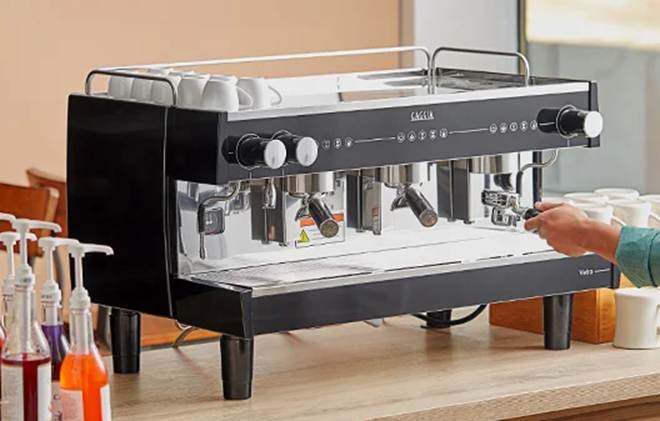
In 2025, one bank jokingly treated a break room change like a full blown merger. The facilities team decided to replace two rival coffee machines, one fancy espresso maker and one industrial strength drip pot, with a single “enterprise” machine, and the M&A group immediately branded it the “BeanCo–BrewCorp deal.” They mocked up a mini pitch deck touting “synergies” like fewer elevator trips and lower filter costs, and even warned of “cultural integration risk” between espresso loyalists and drip traditionalists. When the new machine broke on day one, a VP quipped that management had “overestimated synergies and under-diligenced operations,” turning the whole episode into a running joke about how even the tiniest “merger” lives or dies on integration and culture.
On This Day – Notable Mergers & Acquisitions throughout 2025
January 15
- 2025 – Johnson & Johnson acquired Intra-Cellular Therapies for $14.6 Billion. The deal gives J&J control of the US Food and Drug Administration (FDA) approved drug Caplyta (lumateperone) for schizophrenia and bipolar depression. https://www.bioxconomy.com/partnering/bioxconomy-s-top-10-m-a-deals-of-2025
March 4
- 2025 – Blackrock acquires Huntington Port’s assets in a $22.8 billion deal. Their largest infrastructure deal to date, Blackrock acquired a total of 43 ports in 22 countries. https://www.mergersight.com/post/blackrock-til-consortium-s-22-8bn-acquisition-of-hutchison-ports-assets
March 18
- 2025 – Alphabet (Google) signed an agreement to purchase Wiz, a leading cloud security platform headquartered in New York for $32 billion in an all-cash transaction. https://blog.google/inside-google/company-announcements/google-agreement-acquire-wiz/
May 16
- 2025 – Charter Communications and Cox Communications announced that they were entering a merger deal valued at $34.5 billion. Charter acquired Cox’s commercial fiber, managed IT, and cloud businesses in the deal. https://www.channelfutures.com/mergers-acquisitions/top-channel-impacting-tech-ma-2025-so-far
July 17
- 2025 – Synopsis, a global leader in electronic design automation, and Ansys, a company that makes aerospace components and life-saving medical devices agree to a merger valued at $35 billion. This merger allows the new company to solve issues in all phases of the product development life cycle. https://www.tradingcalendar.com/post/anss-snps-merger
October 9
- 2025 – Novo Nordisk announced that they are acquiring Akero Therapeutics for $5.2 billion. This deal bolsters Novo Nordisk’ s presence in the liver cirrhosis space and includes bonuses tied to other regulatory approvals. https://www.drugdiscoverytrends.com/2025-pharma-ma-surges-to-70-billion/
October 20
- 2025 – Electronic Arts (EA), one of the world’s largest gaming companies, has been acquired by Saudi Arabia’s Sovereign Wealth Fund. This deal, valued at $55 billion, takes the company private in the second largest deal ever penned in the space. https://theconversation.com/what-the-us-55-billion-electronic-arts-takeover-means-for-video-game-workers-and-the-industry-267206
October 30
- 2025 – Mark Walters acquires a majority stake in the Los Angeles Lakers at a record-setting $10 billion valuation for a sports team. BofA Securities and Guggenheim Securities served as financial advisors for Walter, with Davis Polk & Wardwell LLP acting as legal advisor. https://www.nba.com/lakers/news/mark-walter-acquires-majority-stake-in-lakers
December 5
- 2025 – While the deal has not been confirmed yet, Netflix has placed a bid of $82.7 billion to acquire Warner Bros. Netflix plans to use this acquisition to bolster their media catalogue and become a much larger media empire as it pioneers into the future. https://about.netflix.com/en/news/netflix-to-acquire-warner-bros
December 19
- 2025 – TikTok’s Chinese owner, Bytedance signed binding agreements to hand control of the short video app’s U.S. operations to a group of investors, including Oracle in a big step toward avoiding a ban in the United States and ending years of uncertainty. https://www.reuters.com/business/american-investor-consortium-acquire-tiktok-us-entity-axios-reports-2025-12-18/
About Topsail Capital Advisors – Topsail Capital Advisors is a sell-side Mergers & Acquisitions advisory firm focusing on mid-size to lower middle-market, privately held businesses throughout the US. Topsail fills the gap between traditional main street business brokerage firms and the larger investment banking institutions. TCA core services includes valuations, exit planning, sell-side advisory, and capital solutions. Learn more at topsailcapitaladvisors.com.